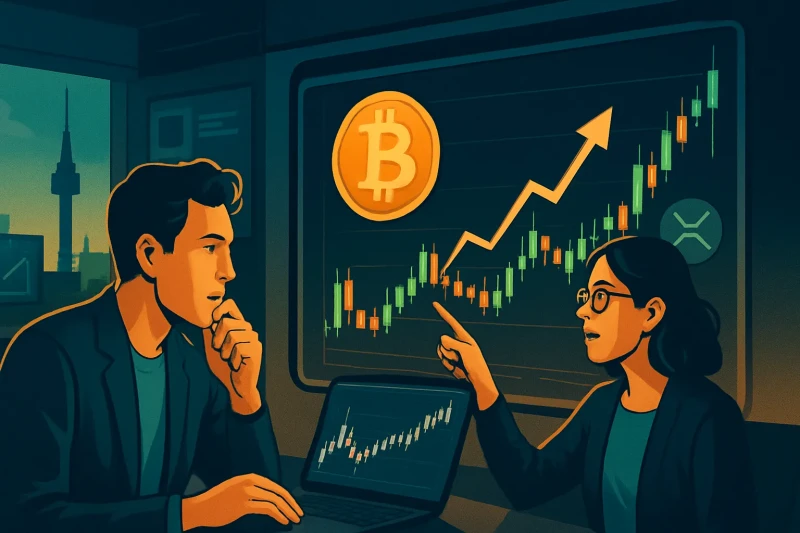
Global flows slowed, but Korea moved first: Bitcoin's trading volume surged by 15% (as of 2026-05-25T11:35:22.000Z) tied to heightened retail activity in Seoul. It’s the chess move effect—Korea makes it, the world reacts a beat later.
If you’ve traded in Seoul, you know this déjà vu feeling. Korea has often led market movements that ripple across borders, making it a critical player in the global crypto landscape. The recent surge highlights South Korea's unique position where local dynamics can spark global shifts.
🔍 Why does Korea's crypto pulse matter globally?
Korea’s crypto market is more than just numbers; it's an indicator of broader trends that often forecast global movements. When Korean investors increase their activity, particularly in Bitcoin trades, it frequently precedes larger global trends. This phenomenon occurs due to Korea's tech-savvy population and high internet penetration rate—factors that amplify its influence on the crypto stage.
The country also benefits from robust regulatory frameworks that are relatively favorable compared to some Western markets. These conditions enable faster adoption and innovation within the sector. For example, when Korean exchanges list new tokens or engage in significant Bitcoin trading volumes, it often sets a precedent that international platforms follow.
⚡ How does Korea compare to global markets?
The divergence between Korean and global markets is starkly evident through trading volumes and price premiums. While Bitcoin saw a 15% increase in trading volume recently, this contrasts with stagnating volumes on major Western exchanges. Furthermore, the Kimchi premium—a higher price for cryptocurrencies on Korean exchanges compared to international averages—often reemerges during such surges.
This premium reflects local demand and investor sentiment that doesn't always align with Western markets. For instance, during periods of uncertainty like U.S inflation hikes or European regulatory changes, South Korean investors might either react more swiftly or exhibit contrary behavior based on domestic economic cues.
💡 What is the Kimchi premium?
The Kimchi premium can be likened to paying extra for convenience at your neighborhood store rather than driving further for a discount at a big-box retailer—a choice driven by urgency or necessity rather than price alone.
🎯 Should you be conservative or active right now?
Your approach largely depends on your investment strategy and risk tolerance. If you lean towards active trading, keeping an eye on Korea-centric signals like sudden volume spikes could offer lucrative opportunities for quick gains. Conversely, conservative investors might prioritize portfolio diversification while monitoring these signals as part of a broader strategy.
🚀 What should be added to your watchlist?
Add KRW turnover share to your watchlist—tomorrow’s move could be the surprise setup. Given its historical impact on global trends, closely observing how Korean won interacts with cryptocurrency dynamics could provide early warnings or confirmations for strategic moves elsewhere.
If you've been following these patterns as closely as I do—I’d probably stay cautious here—the potential implications are undeniably exciting but require careful navigation given market volatility.
What do you think this means for the market?

