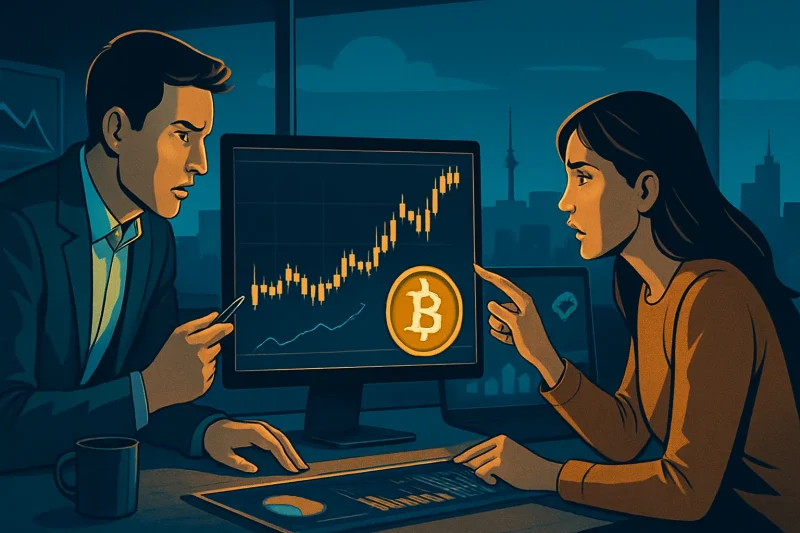
As Seoul’s morning opened, Bitcoin posted 4% gains (as of 2026-01-06T06:07:08.000Z). What looks small could spark something big.
Korea just flashed a significant liquidity crunch—a sign global investors often miss until later.
🔍 Why Does Korea's Liquidity Crunch Matter Globally?
The Korean crypto market is notorious for its rapid movements, often acting as a leading indicator for global trends. The liquidity crunch we're witnessing today comes amid tightening capital controls and increased scrutiny over digital asset exchanges. For international traders, understanding these shifts is crucial because they can foreshadow broader market turbulence or opportunities elsewhere. If you’ve traded in Seoul, you know this déjà vu feeling when local shifts precede global waves.
With South Korea's regulatory environment becoming more stringent, the liquidity landscape has transformed significantly. This shift is not merely a local issue but one that could ripple through international markets by affecting cross-border trading volumes and sentiment.
⚡ How Do Korea's Numbers Stack Up Against Global Trends?
When we compare trading volumes, South Korea has seen a decline of 15% over the past month compared to a global average decrease of 5%. This disparity highlights how Korean market conditions are becoming more isolated due to domestic policy changes. Conversely, Bitcoin's price on Korean exchanges remains at a 3% premium, known as the "Kimchi Premium," compared to other major markets like the U.S. and Europe.
This divergence offers both challenges and opportunities for savvy investors looking to leverage arbitrage strategies or hedge their positions against regional market anomalies. Have you noticed similar patterns in your trading activities?
💡 Unpacking the Kimchi Premium
The "Kimchi Premium" refers to the higher price of cryptocurrencies on Korean exchanges compared to other markets. It's akin to paying extra for imported goods due to local demand outstripping supply—much like premium pricing on luxury items in exclusive boutiques. This phenomenon occurs partly because of strict capital controls that limit arbitrage opportunities between Korean and foreign exchanges.
🎯 Next Steps: Your Checklist or Watchlist?
If you're a conservative investor, focusing on stable assets might be wise until there's clearer regulatory guidance from Korean authorities. However, active traders can consider exploiting short-term volatility spikes driven by local news events or policy updates—adding KRW turnover share might just be what your next trade watchlist needs.
🚀 Closing Thoughts
Add KRW turnover share to your watchlist—tomorrow’s move could be the surprise setup that defines early 2026 trading strategies globally. What do you think this means for the market?

