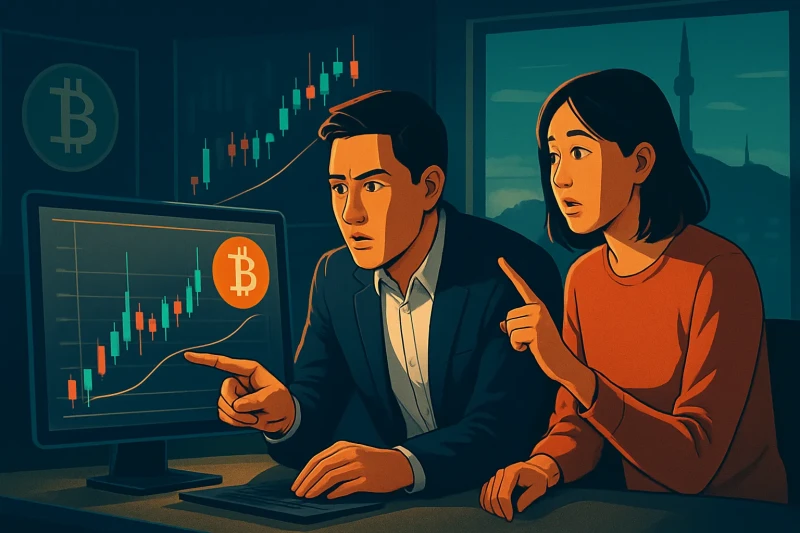
As Seoul’s morning opened, Bitcoin posted ₩77,000,000 (as of 2026-02-25T22:00:00.000Z). What looks small could spark something big.
Korea just flashed a significant increase in Bitcoin trading volume—a sign global investors often miss until later.
🔍 What Drives Korea's Crypto Volatility?
The South Korean crypto market is known for its unique volatility, largely driven by domestic retail investors who are quick to react to both local and international news. This has been amplified by the recent surge in Bitcoin trading volume. When Korea makes a move, it often sends ripples across global markets. The country’s regulatory environment is another critical factor that contributes to this volatility. With the government frequently updating crypto regulations, investors keep a close watch on policy changes that could impact market dynamics.
If you’ve traded in Seoul, you know this déjà vu feeling—how swift movements here can set the stage for global trends.
⚡ Numbers Tell the Story: Korea vs Global
The past month has seen South Korea accounting for approximately 12% of global Bitcoin trading volume, compared to an average of 8% globally. This marks a 50% increase from previous months, showcasing how Korean traders are more active than their international counterparts during periods of high market activity. Moreover, while global Bitcoin prices stabilized around $57,000, Korean exchanges like Upbit reported prices as high as $59,500, reflecting the notorious "Kimchi premium."
This divergence raises questions about arbitrage opportunities—would you consider exploring them?
💡 What Does Kimchi Premium Reveal?
The Kimchi premium is a phenomenon where cryptocurrencies trade at higher prices on South Korean exchanges compared to their global counterparts. It's akin to paying a premium for imported goods due to local demand and supply imbalances. This price discrepancy often signals strong local interest and can serve as an early indicator for potential upward trends in crypto assets.
🎯 Should You Adjust Your Strategy?
If you're a conservative investor, monitoring these regional shifts without immediate action might be wise; however, active traders could consider leveraging these trends for short-term gains. Adding metrics like KRW turnover share to your checklist might offer insights into future movements that could be advantageous.
I’d probably stay cautious here given how quickly things can change—but most readers might feel the same way.
🚀 What Could Tomorrow Bring?
Add KRW turnover share to your watchlist—tomorrow’s move could be the surprise setup.
Your thoughts? How do you see these insights shaping your investment strategy?

