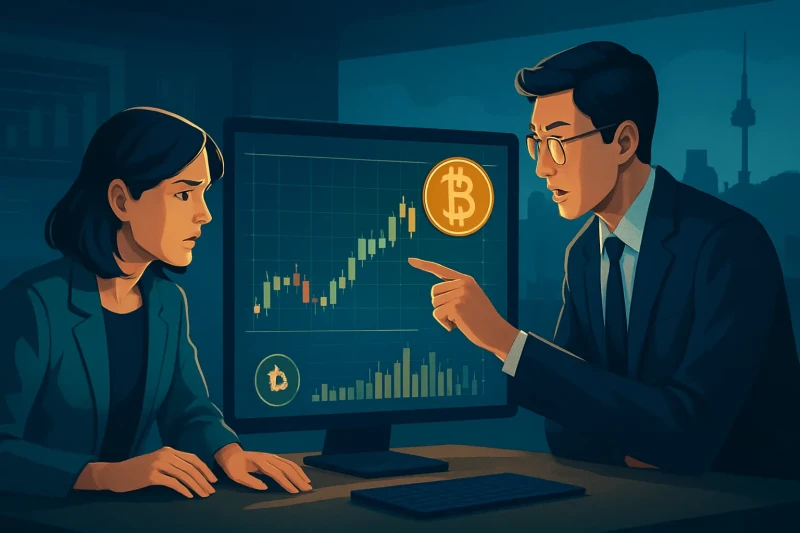
As Seoul’s morning opened, Bitcoin traded at ₩75,300,000 (as of 2026-02-27T22:00:00.000Z). What looks small could spark something big.
Korea just flashed a unique liquidity pattern—a sign global investors often miss until later.
🔍 How Does Korea's Crypto Liquidity Impact Global Markets?
The Korean crypto market is known for its agility and often sets the pace in Asia. A case in point is the Kimchi Premium, where Bitcoin prices in Korea can significantly deviate from global averages. This premium arises due to capital control regulations, creating a unique market dynamic that savvy investors track closely. For global markets, this means shifts in Korean liquidity can serve as early indicators of broader trends. If you’ve traded in Seoul, you know this déjà vu feeling when local moves preempt global reactions.
⚡ Comparing Market Dynamics: Korea vs Global
Recent data show that Korea's trading volumes for Ethereum surged by 12%, while global volumes only increased by 4%. This stark contrast highlights Korea’s rapid adoption and nimbleness compared to other regions. Notably, Korean exchanges like Upbit reported record-high transactions driven by retail investor enthusiasm and favorable regulatory news. Such discrepancies not only offer arbitrage opportunities but also suggest potential for outsized gains or losses depending on how these dynamics unfold globally.
If you're an active trader, does this divergence affect your strategy?
💡 Understanding the Kimchi Premium
The Kimchi Premium is akin to a telltale ripple effect; it may seem subtle but indicates larger undercurrents at play. Historically, when the premium widens beyond 5%, it often signals heightened speculative activity within Korea. This phenomenon can be likened to a barometer for local sentiment—when the premium peaks, it suggests increased domestic demand pushing prices higher than international counterparts. Observing these fluctuations can provide crucial insight into timing entries and exits in volatile markets.
🎯 Navigating Opportunities: Conservative vs Active Investors
The current landscape poses distinct paths for different types of investors. Conservative participants might focus on stablecoins and yield farming within regulated environments to mitigate risk exposure during volatile periods marked by widening premiums or sudden volume spikes. On the other hand, active traders could look into tactical short-term plays leveraging local sentiment cues like Naver search trends or order-book skews on major exchanges.
Your next trade watchlist might benefit from including these Korean-specific signals—how will they shape your approach?
🚀 Looking Ahead: What’s Next for Investors?
Add KRW turnover share to your watchlist—tomorrow’s move could be the surprise setup that aligns with broader regional trends or offers unique arbitrage opportunities across exchanges worldwide.
If you’ve been watching these metrics closely, what do you think this means for the market?

