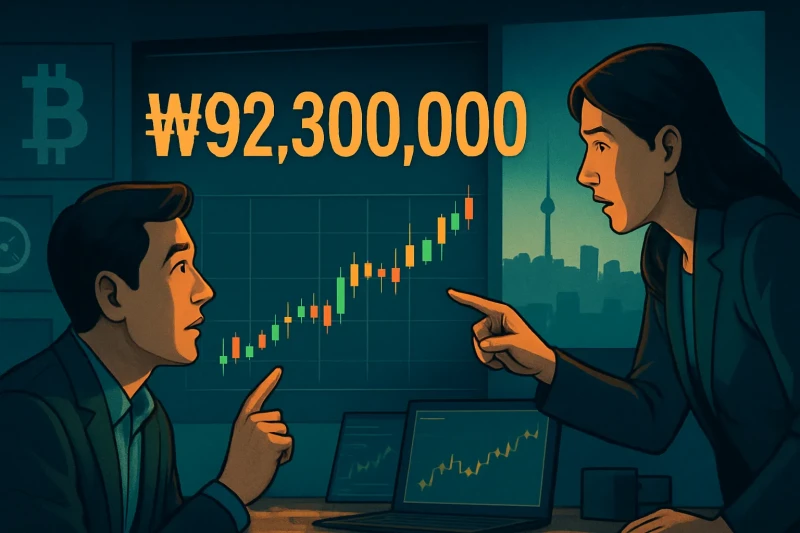
As Seoul’s morning opened, Bitcoin posted ₩92,300,000 (as of 2026-03-02T02:23:05.000Z). What looks small could spark something big.
Korea just flashed a Kimchi premium—a sign global investors often miss until later.
🔍 Why Is This Kimchi Premium Important?
The Kimchi premium refers to the price difference of Bitcoin in South Korea versus global markets. It’s a unique indicator that signifies investor sentiment and market conditions specific to Korea. The premium is often seen when Korean demand for cryptocurrencies surges, pushing local prices higher than international rates.
This phenomenon matters globally because it can signal shifts in market dynamics. When the Kimchi premium widens, it suggests strong domestic buying interest that might pre-empt similar trends elsewhere. If you've traded in Seoul, you know this déjà vu feeling when local enthusiasm precedes global movement.
⚡ How Does Korea Compare Globally?
Comparatively speaking, while the average global Bitcoin price hovers around $66,200, Korean exchanges are trading it at approximately $67,500. This represents about a 2% higher price point within Korea due to the premium effect. During heightened geopolitical tensions or economic uncertainty—like those affecting US markets—Korean traders often exhibit increased activity as they seek alternatives to traditional assets.
This divergence presents opportunities for arbitrage strategies or insights into potential upcoming trends in the crypto space. Most readers might feel the same way—cautiously optimistic yet aware of inherent risks.
💡 What Unique Signals Does Korea Offer?
Korea's Naver sentiment index provides another intriguing insight into local market psychology. Similar to Google Trends but with a sharper regional focus, Naver search data reveals spikes in cryptocurrency-related queries whenever there is significant market movement or news events. This can act as an early warning system for traders looking to anticipate volatility based on public interest levels.
Naver's influence on trading behavior can't be overstated—it’s akin to reading crowd emotions before they translate into actual trades. Have you noticed how social media buzz sometimes mirrors market excitement?
🎯 Should You Adjust Your Investment Strategy?
The current environment suggests different strategies depending on investor profiles. Conservative investors might prefer to hold and monitor macroeconomic cues like US Federal Reserve policies or Middle East developments before making substantial moves. Active traders could benefit from exploiting regional premiums and volatility patterns observed through platforms like Upbit.
Your checklist should include monitoring KRW turnover share—a potential leading indicator of market shifts—and staying attuned to geopolitical updates that could affect liquidity flows and risk appetite.
🚀 What's Next for Korean Traders?
Add KRW turnover share to your watchlist—tomorrow’s move could be the surprise setup that reshapes your portfolio strategy or triggers a new trend globally. It’s an exciting time for those ready to adapt quickly and strategically to evolving markets.
What do you think this means for the market?

