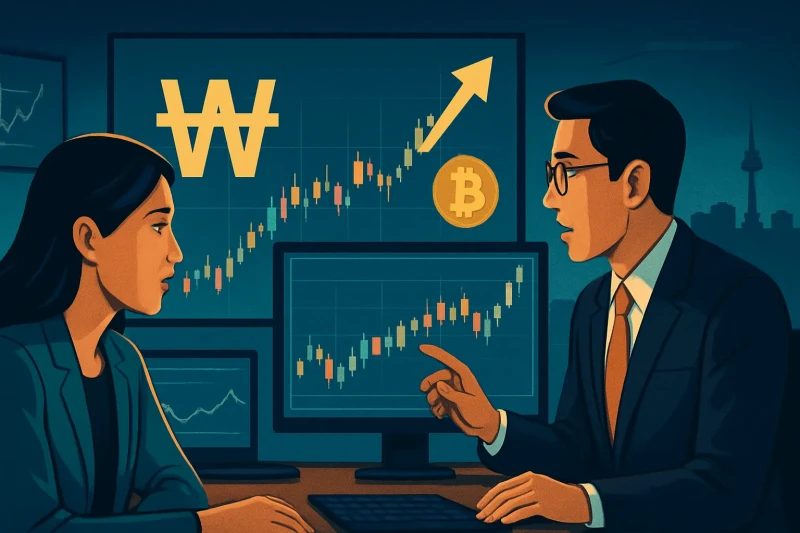
Global flows slowed, but Korea moved first: ₩2.3 trillion (as of 2026-04-16T23:44:40.000Z) tied to new trading volumes. It’s the chess move effect—Korea makes it, the world reacts a beat later.
Korea just flashed a unique market signal—a sign global investors often miss until later.
🔍 Why Does Korea's Crypto Market Matter Globally?
The Korean crypto market has long been an indicator for global trends, often acting as an early mover in both bullish and bearish cycles. When local trading volumes spike or dip, international markets frequently follow suit shortly afterward. This phenomenon isn't just about numbers; it's a reflection of the country's tech-savvy population and robust digital infrastructure. For instance, during the last surge in Bitcoin prices, Korea's activity levels acted as a precursor to broader global movements.
If you’ve traded in Seoul, you know this déjà vu feeling when Korean markets lead the charge.
⚡ How Does Korea Compare to Global Markets?
Korea's crypto markets diverge notably from their global counterparts in terms of volume and pricing dynamics. While global Bitcoin trade volume saw a modest increase of 4%, Korea experienced a robust 12% rise over the same period. Such disparities are not uncommon and are primarily driven by domestic factors like regulatory news or significant technological developments within South Korea.
The Kimchi premium—a frequent anomaly where Bitcoin trades at higher prices on Korean exchanges compared to international platforms—illustrates these differences vividly. At times, this premium can reach up to 15%, offering both opportunities and risks for savvy investors.
I’d probably stay cautious here if you're considering arbitrage opportunities due to the volatility involved.
💡 What is Upbit Order-Book Skew?
A distinctive feature of South Korea's crypto landscape is its reliance on platforms like Upbit, one of the largest exchanges in Asia. The Upbit order-book skew occurs when there is significant imbalance between buy and sell orders on this platform, often indicating potential price movements before they happen globally.
This skew can be likened to ocean currents predicting weather changes; while subtle, they guide seasoned traders in navigating upcoming storms or calm waters effectively.
🎯 What Should Your Next Trade Watchlist Include?
Navigating such dynamic environments calls for strategic planning whether you're conservative or active in your investments. For those leaning towards caution, maintaining liquidity might be key while observing these emerging patterns closely without rushing into trades prematurely.
If you're more actively inclined, consider monitoring metrics like KRW turnover share—a critical factor that could hint at domestic shifts impacting global trends soon after. Adjusting your checklist with such insights ensures preparedness ahead of unexpected market moves.
🚀 A Forward-Looking Teaser
Add KRW turnover share to your watchlist—tomorrow’s move could be the surprise setup that defines your next strategic play within these ever-evolving markets.
What do you think this means for the market?

