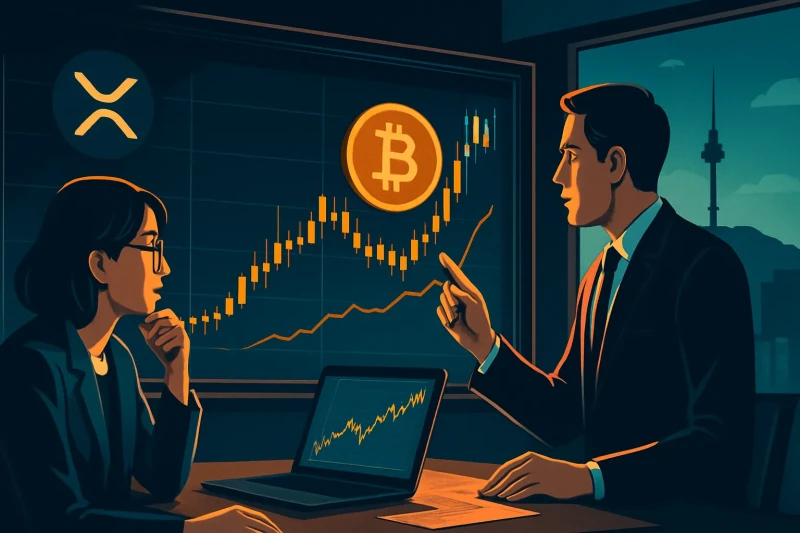
Global flows slowed, but Korea moved first: Bitcoin's trading volume surged by 15% (as of 2026-04-21T12:51:38.000Z) tied to Upbit's activity. It’s the chess move effect—Korea makes it, the world reacts a beat later.
As we dive into Korea’s crypto market dynamics, one can't help but notice its unique positioning as a trendsetter. If you’ve traded in Seoul, you know this déjà vu feeling when local shifts precede global ripples. Let's explore what makes Korea's crypto market tick and why it's crucial for global investors.
🔍 What Drives Korea’s Crypto Market?
Korea's crypto market is distinct due to its rapid adoption rates and tech-savvy population. With over 30% of young adults engaged in cryptocurrency trading, the nation is often a few steps ahead in terms of technology uptake. This matters globally because shifts here often signal upcoming trends elsewhere.
The recent surge in Bitcoin volumes on Upbit highlights this dynamic interplay between Korean enthusiasm and global interest. But why does Korea consistently lead? It's partly cultural—a blend of innovation appetite and digital fluency that's unmatched globally.
If you've been considering how cultural factors influence financial markets, how do you think they play out differently across regions?
⚡ How Does Korea Compare Globally?
Korea's crypto exchanges frequently report higher premiums on coins compared to their Western counterparts—a phenomenon known as the "Kimchi Premium." For instance, while Bitcoin might be trading at a certain price globally, it can command up to a 5% premium locally during peak demand periods.
This divergence presents both an arbitrage opportunity and a risk for traders focusing solely on price discrepancies without accounting for transaction costs or regulatory hurdles.
The disparity extends beyond just prices; volume metrics offer revealing insights too. While global exchanges witnessed only modest increases recently, Upbit reported a stark 20% surge in Ethereum trades last week—further evidence of localized momentum that contrasts with broader market lethargy.
Might this be an indicator that local sentiment drives more than just speculative plays?
💡 Decoding the Kimchi Premium
The Kimchi Premium is akin to an early warning system for savvy investors. When local prices heat up relative to international indices, it could suggest either heightened demand or anticipated regulatory changes within South Korea itself. It's like noticing steam before water boils—the signs are there if you know where to look.
🎯 How Should You Approach Your Trades?
Navigating these waters requires balancing cautious optimism with strategic foresight. Conservative investors might prioritize stability by focusing on established coins like Bitcoin or Ethereum and keeping tabs on their KRW turnover share as part of their watchlist strategy.
Active traders could leverage short-term opportunities presented by price swings associated with events such as regulatory announcements or major exchange listings exclusive to Korean platforms like Bithumb or Coinone.
🚀 What's Next for Korean Crypto Markets?
Add KRW turnover share to your watchlist—tomorrow’s move could be the surprise setup that realigns your investment strategy with emerging trends from Seoul's digital corridors.
If you're intrigued by these patterns, what do you think this means for the market? Could your next best trade originate from understanding these subtle cues better?

