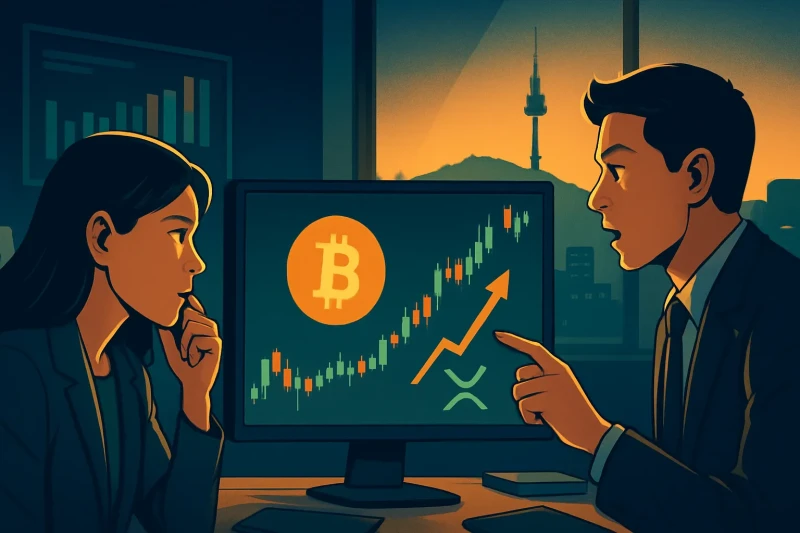
As Seoul’s morning opened, Bitcoin's trading volume surged by 15% (as of 2026-04-19T14:19:31.000Z). What looks small could spark something big.
Korea just flashed a microstructure anomaly—a sign global investors often miss until later.
🔍 Why Is Korea's Crypto Market Unique?
The South Korean crypto market is characterized by its unique investor profile and distinct trading behaviors, diverging significantly from global norms. This difference is largely driven by the local regulatory environment and cultural factors that emphasize rapid adoption of new technologies. In recent times, Korean exchanges have shown a preference for altcoins over Bitcoin, which contrasts with the global trend where Bitcoin dominance remains strong. This divergence presents both opportunities and challenges for international investors looking to capitalize on Korean market trends.
If you've traded in Seoul, you know this déjà vu feeling—where local sentiment turns swiftly and decisively compared to more cautious global markets. How do you see these differences influencing your investment strategy?
⚡ Korea vs Global: The Numbers Tell the Story
The contrast between the Korean and global crypto markets can be stark when diving into specifics. For instance, while Bitcoin's global dominance sits at around 40%, on Korean platforms like Upbit, it often dips below 30%. This indicates a stronger inclination towards altcoins among Korean traders. Additionally, trading volumes in Korea exhibit higher volatility; for example, Ethereum saw a 20% increase in volume on Upbit last week compared to a mere 8% globally during the same period.
The numbers reveal both risks and rewards for those attuned to Korea-specific signals. Are you considering diversifying your portfolio based on these regional trends?
💡 The Kimchi Premium Explained
A distinctive feature of the South Korean crypto market is the "Kimchi premium," which refers to the price gap between cryptocurrencies traded on South Korean exchanges versus international ones. This premium can fluctuate based on several factors such as local demand spikes or regulatory news within Korea. Think of it as a weather vane indicating shifts in local investor sentiment—when prices on Bithumb soar above Binance by more than 5%, it's akin to sensing an impending storm that hasn't yet touched down globally.
🎯 Active vs Conservative: Tailoring Your Strategy
If you're an active investor eyeing quick gains from market discrepancies like the Kimchi premium or sudden volume surges, staying updated with real-time data from Seoul-based exchanges can be invaluable. Conversely, conservative investors might focus on longer-term trends observed within this dynamic market landscape—such as tracking KRW turnover share or analyzing Naver sentiment indices over time.
Your checklist should include watching for regulatory changes that could impact liquidity or access restrictions in Korea—how do these elements influence your next trade watchlist?
🚀 What's Next for Investors?
Add KRW turnover share to your watchlist—tomorrow’s move could be the surprise setup that shifts market dynamics once again. With South Korea's unique position in cryptocurrency trading landscapes, there's always an element of unpredictability mixed with opportunity.
I’d probably stay cautious here while monitoring daily developments closely—most readers might feel the same way given recent fluctuations.
What do you think this means for the market?

