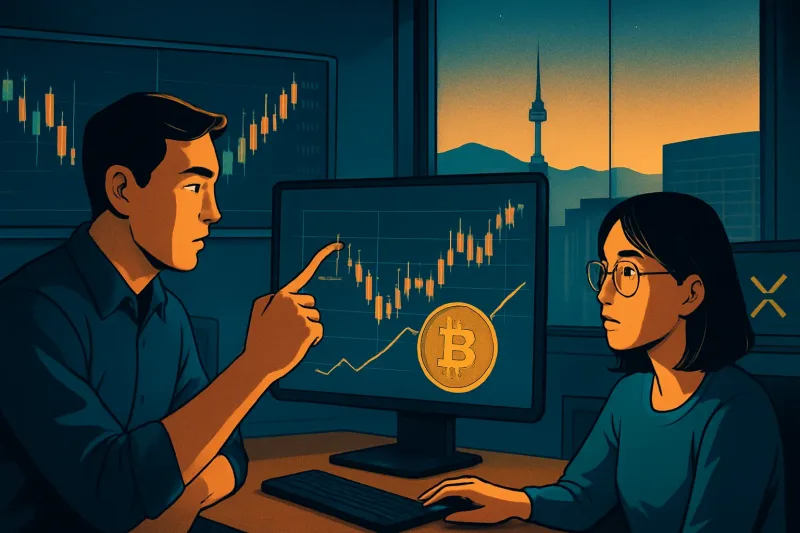
Global flows slowed, but Korea moved first: Bitcoin's trading volume surged by 15% (as of 2026-05-03T08:41:50.000Z) tied to recent regulatory changes. It’s the chess move effect—Korea makes it, the world reacts a beat later.
Korea just flashed a crypto liquidity shift—a sign global investors often miss until later. If you’ve traded in Seoul, you know this déjà vu feeling.
🔍 Why is Korea leading the charge?
In recent weeks, South Korea has emerged as a significant player in the crypto market landscape. Unlike other regions that are experiencing stagnation due to economic concerns or regulatory hurdles, South Korea is making bold moves that ripple across global markets. The nation’s proactive approach in clarifying regulations and fostering blockchain innovation has bolstered investor confidence and attracted increased trading volumes.
This matters globally because South Korea serves as an early indicator for trends likely to spill over into other regions. As one of the most technologically advanced countries with high mobile penetration, any shift here could prelude larger movements elsewhere. Do you think this will spark similar actions globally?
⚡ How does Korea's market compare with others?
The divergent paths between Korean and global markets are evident when examining trading volumes and price stability. While Bitcoin has seen a 15% surge in volume within Korea, other major markets like the U.S. and Europe have only experienced single-digit growth during the same period.
This disparity highlights a unique opportunity for investors who are keen on capitalizing on regional trends before they gain momentum globally. The Kimchi premium—a phenomenon where cryptocurrencies trade at higher prices in South Korea than elsewhere—continues to be an intriguing aspect of this market divergence.
💡 Understanding the Kimchi Premium
The Kimchi premium can be likened to an exclusive concert ticket that's priced higher due to limited availability and high demand—it's all about scarcity driving value. This premium indicates robust domestic demand which often precedes bullish runs globally.
🎯 What should be on your watchlist?
The current climate suggests different strategies depending on your risk appetite. Conservative investors might focus on gradual accumulation while monitoring regulatory developments closely. Active traders could capitalize on arbitrage opportunities presented by price gaps between Korean exchanges and their international counterparts.
🚀 What's next for savvy investors?
Add KRW turnover share to your watchlist—tomorrow’s move could be the surprise setup prompting further strategic plays across Asian markets.
If April's trends are any indicator, May might prove pivotal for those looking to understand long-term shifts originating from Asia's fourth-largest economy. What do you think this means for the market?

