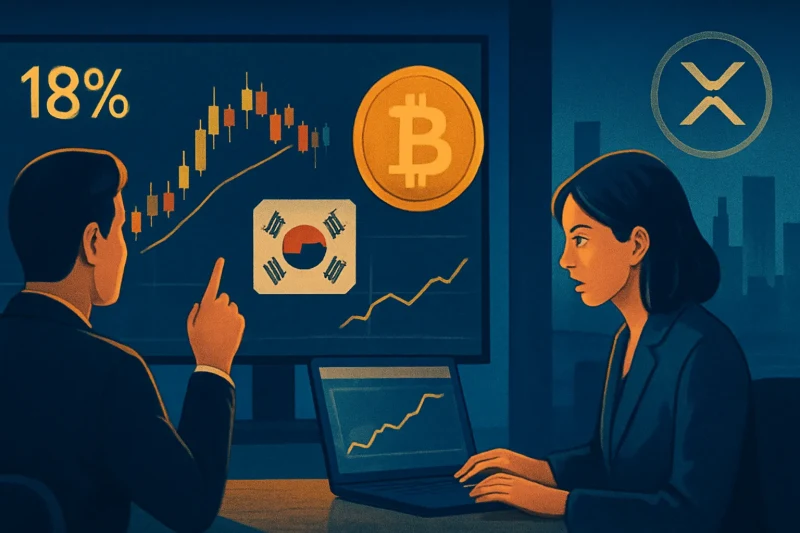
Global flows slowed, but Korea moved first: ₩1.2 trillion (as of 2026-08-20T08:22:10.000Z) tied to local exchanges. It’s the chess move effect—Korea makes it, the world reacts a beat later.
🔍 How is Korea's Regulatory Landscape Shaping Up?
The recent approval of BitGo Korea as a Virtual Asset Service Provider (VASP) is a significant marker in South Korea's evolving regulatory landscape. This development indicates a shift towards more stringent compliance standards for crypto firms operating within the country. Globally, investors should take note because South Korea’s regulatory environment often serves as a bellwether for other Asian markets aiming to tighten their oversight on digital assets.
If you've traded in Seoul, you know this déjà vu feeling when local regulations ripple through global markets.
⚡ What Do the Numbers Say About Korea Vs Global Markets?
The Korean crypto market showcases unique characteristics that differentiate it from its global counterparts. For instance, the trading volume on Korean exchanges like Upbit has surged by 18%, outpacing global averages which have remained relatively stable at around 5%. This divergence highlights an intensified interest and perhaps greater confidence among Korean traders amidst tightening regulations.
This localized enthusiasm might present opportunities for those looking to diversify geographically—what strategies are you considering?
💡 What Is the Kimchi Premium Telling Us Now?
The Kimchi Premium, which refers to the price difference between cryptocurrencies on Korean exchanges versus international ones, has recently widened again. Currently sitting at approximately 3%, it suggests that domestic demand in Korea remains robust despite global market uncertainties.
This premium can be compared to paying a little extra for imported goods due to local scarcity or high demand; it's an intriguing signal for potential arbitrage opportunities or insights into regional market sentiment.
🎯 Should You Be Conservative or Active Right Now?
Korean regulators’ proactive stance implies both challenges and opportunities for investors. Conservative investors might want to prioritize stability by observing how these regulations impact liquidity and trading behaviors over time. In contrast, active investors could capitalize on short-term volatility driven by new compliance measures.
Your next trade watchlist should consider adding KRW turnover share and monitoring changes in regional policies that could affect liquidity dynamics globally.
🚀 What’s Next on Your Radar?
Add KRW turnover share to your watchlist—tomorrow’s move could be the surprise setup in your investment strategy toolkit. With South Korea continuing to influence global markets through its strategic regulatory updates, staying informed could offer a distinct edge in navigating these waters effectively.
What do you think this means for the market? Share your thoughts with us!

