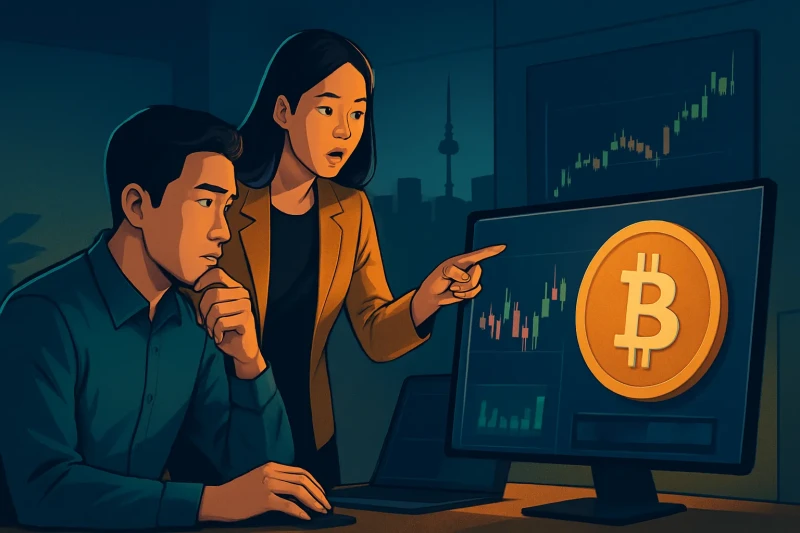
As Seoul’s morning opened, Bitcoin posted $88,140 with a slight dip of -0.26% (as of 2025-12-12T15:35:07.000Z). What looks small could spark something big.
Korea just flashed a subtle trading volume increase—a sign global investors often miss until later.
🔍 What Drives Korea's Crypto Sentiment?
The South Korean crypto market is renowned for its dynamic and sometimes volatile nature. This often stems from unique factors such as regulatory shifts and cultural predispositions toward technology adoption. For instance, while the U.S. might react strongly to macroeconomic signals like inflation data or Federal Reserve announcements, Korean traders are more likely to be influenced by local government statements regarding cryptocurrency regulation or new tech partnerships within the industry.
If you’ve traded in Seoul, you know this déjà vu feeling when local news triggers sudden market moves that ripple globally. The question is—how do these regional cues resonate with broader market trends?
⚡ Korea vs Global: A Tale of Two Markets
When comparing the trading patterns between Korea and global markets, one notices significant divergences in behavior and volume responses. For example, during periods when Bitcoin experiences a -0.26% decline globally, as observed recently (as of 2025-12-12T15:35:07.000Z), Korean exchanges like Upbit often see an uptick in trading volumes due to speculative buying opportunities perceived by local investors.
This divergence suggests an underlying confidence in certain assets that may not be reflected internationally at the same time. Do you find yourself drawn to these discrepancies when planning your next trade?
💡 Understanding the Kimchi Premium
The "Kimchi Premium" is a term used to describe the higher prices seen on Korean exchanges compared to their Western counterparts. Imagine it as buying a concert ticket directly from the venue versus through a reseller; there's an urgency and willingness to pay more due to perceived scarcity or immediate need.
This premium can serve as an indicator of strong domestic demand and has historically been tied to bullish sentiment within Korea's borders even when global markets remain tepid. How might this affect your investment strategy if you're considering entering or exiting positions based on regional pricing differences?
🎯 How Should Investors React?
Navigating these nuances requires both patience and strategy adaptation depending on one's investment style—whether conservative or active. Active investors might exploit these price differentials for short-term gains by riding momentum swings prompted by local news events or technological advancements unique to Korea.
If you're updating your checklist or next trade watchlist today, consider adding metrics like KRW turnover share for further insights into potential upcoming market shifts within this vibrant region.
🚀 What's Next for the Market?
Add KRW turnover share to your watchlist—tomorrow’s move could be the surprise setup waiting just around the corner.
What do you think this means for the market?

